
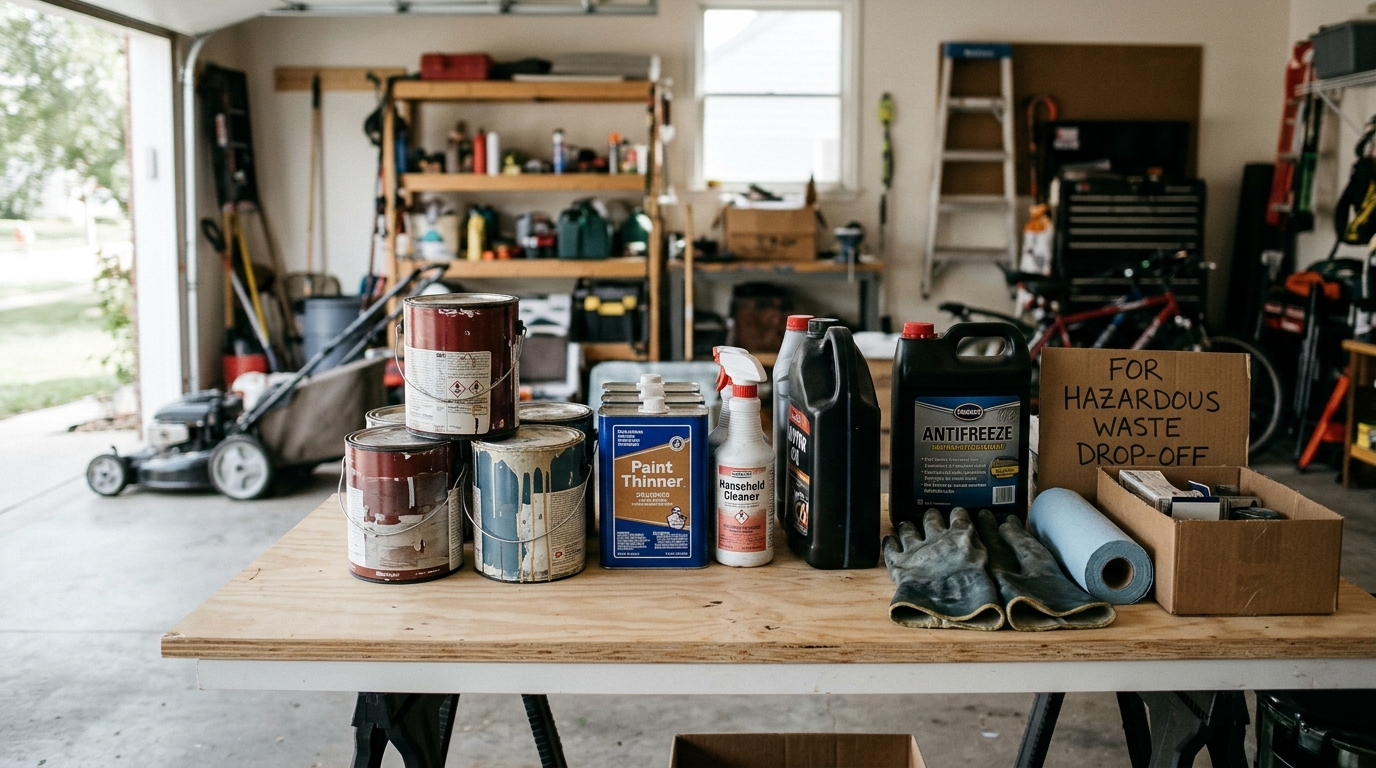
The Chemistry of Residential Hazard: What Makes Household Products Legally Hazardous
Beneath everyday kitchen sinks, along dusty basement shelving, and inside suburban utility sheds lies an arsenal of synthetic compounds capable of catastrophic environmental damage when diverted into standard municipal trash streams. Under the United States Environmental Protection Agency’s Resource Conservation and Recovery Act (RCRA, 40 CFR Part 261), hazardous waste is strictly defined by four dangerous physical and chemical characteristics: Ignitability, Corrosivity, Reactivity, and Toxicity. While individual households are technically exempt from federal commercial hazardous waste manifesting requirements under 40 CFR 261.4(b)(1), this regulatory leeway does not nullify the severe chemistry at play.
When compressed in the hydraulic hopper of an automated curbside garbage truck, a leaking quart of mineral spirits can ignite via static friction. When poured down a residential sink, drain, or sanitary toilet, caustic lye dissolves plumbing seals and paralyzes the delicate biological nitrification reactors utilized by municipal wastewater treatment plants.
Liquids with flash points below 140°F (60°C) or combustible solids. Found in paint thinners, acetone nail polish removers, lacquer sealants, petroleum lighter fluids, and alcohol-based degreasers.
Aqueous chemicals exhibiting a pH less than or equal to 2 (strong acid) or greater than or equal to 12.5 (strong base). Found in muriatic pool acid, battery electrolyte fluids, oven cleaners, and drain uncloggers.
Unstable compounds prone to violent decomposition, detonative reactions, or toxic gas off-gassing when combined with water or ambient moisture. Typical examples include pool cyanuric shock chlorinators, cyanides, and flare cartridges.
Materials likely to leach hazardous heavy metals (lead, mercury, cadmium, arsenic) or dangerous synthetic organics (benzene, chloroform, trichloroethylene) into groundwater aquifers upon landfill exposure.
Latex Paint vs. Oil-Based Alkyd Paints: Fundamental Disposal Differences
Architectural coatings represent over 50% of the total volume brought into municipal household hazardous waste collection facilities each year. However, treating all paint identically results in hundreds of thousands of taxpayer dollars wasted processing non-toxic materials. The crucial operational fork lies between water-based latex (acrylic emulsion) formulas and solvent-borne oil-based (alkyd) resins.
Latex paint is non-hazardous. Composed predominantly of water, vinyl resins, acrylic polymers, and mineral pigments (such as titanium dioxide), latex paint poses minimal ecotoxicity once the carrier liquid has evaporated. If a can of latex paint is completely hardened, it can legally be discarded in your standard curbside residential trash cart. If liquid remains, it must never be poured into sewer drains or dumped raw into trash bags where it can leak onto public streets. Instead, homeowners should add an equal volume of clay cat litter, dry sawdust, or a commercial sodium polyacrylate paint hardener. Stir the mixture, leave the lid off in a well-ventilated garage or patio for 24 to 48 hours until it transforms into a solid, putty-like cake, and place the unlidded can inside your curbside bin.
Oil-based paint is dangerous toxic universal waste. Oil-based stains, polyurethane coatings, alkyd primers, and marine varnishes utilize volatile organic hydrocarbon solvents (such as mineral spirits, petroleum distillates, and xylene) as thinning agents. These solvents remain intensely flammable throughout their lifecycle and release harmful smog-forming volatile organic compounds (VOCs). Oil-based coatings cannot be solidified at home. Solidification attempts only create a large, flammable mass. All oil-based paints, regardless of whether they have thickened or separated, must be preserved in their original containers with intact labels and transported directly to an authorized municipal HHW collection facility for high-temperature thermal incineration or industrial solvent reclamation.
Automotive Fluids: Motor Oil, Ethylene Glycol Antifreeze & Brake Fluid
Automotive drivetrains rely on extreme-pressure synthetic lubricants and heat-transfer fluids that are lethal to freshwater ecosystems and residential septic leach fields. A single gallon of spent automotive crankcase oil contains heavy metals worn from engine bearings (lead, zinc, chromium), alongside polycyclic aromatic hydrocarbons (PAHs) generated during internal combustion. Discharged recklessly into storm drains, just one gallon of motor oil is capable of contaminating one million gallons of clean municipal drinking water—a year’s supply for fifty people.
Fortunately, used motor oil never truly wears out; it simply gets dirty. Under federal and state oil recycling frameworks, modern used oil is re-refined into virgin-grade API-certified base stock or reprocessed into marine industrial fuel. National automotive retail chains (including AutoZone, Advance Auto Parts, O'Reilly Auto Parts, and regional quick-lube centers) are mandated in most states to accept up to 5 gallons of uncontaminated used motor oil per citizen per day, completely free of charge. Motor oil must be transported in clean, dedicated poly containers never old milk jugs or bleach bottles, which can degrade or lead to toxic chemical cross-reactions.
Ethylene glycol engine coolant (antifreeze) presents a severe domestic poisoning hazard. Because of its sweet odor and sugary taste, spilled antifreeze attracts neighborhood domestic pets and wildlife. Ingesting as little as a single teaspoon can trigger acute, irreversible kidney failure and death in adult cats and dogs. Modern commercial formulations incorporate denatonium benzoate (a bittering agent), yet used coolant still picks up toxic copper, lead, and dissolved iron from vehicle radiator cores. Keep antifreeze isolated in tightly capped heavy-duty jugs, clean up all garage drips immediately using absorbent clay sweeps, and transfer old coolant directly to your municipal HHW depot for closed-loop vacuum distillation.
Household Solvents, Aerosols, Pesticides & Pool Chlorine
Garages and utility cabinets often harbor reactive chemicals that can cause chemical burns, noxious vapor releases, or acute respiratory arrest when handled improperly. The single most dangerous domestic accident occurs when homeowners casually combine common cleaning solutions:
Never mix sodium hypochlorite (household bleach) with ammonia-based glass cleaners or acids (vinegar, drain openers, descaling agents). The immediate chemical reaction releases deadly chloramine (NH₂Cl) or pure chlorine gas (Cl₂). Inhalation of these vapors creates hydrochloric acid inside pulmonary tissue, resulting in chemical pneumonitis and fatal pulmonary edema.
Aerosol Spray Cans: Aerosols rely on liquefied hydrocarbon propellants (such as butane, isobutane, and propane). When thrown into household trash compactors or incinerator facilities, pressurized canisters explode with shrapnel force or spark landfill cell fires. An aerosol can is only considered non-hazardous trash if it is completely evacuated and depressurized through normal operational use. If the spray nozzle is clogged or product remains, it must be surrendered directly to an HHW technician.
Organophosphate and Pyrethroid Pesticides: Concentrated agricultural weed killers, systemic insecticides, and rodenticides must remain in their original manufacturer packaging with visible EPA registration numbers. Transferring concentrated chemical poisons into unlabeled soft-drink bottles or food jars is illegal under federal pesticide safety laws and remains the leading cause of accidental poison ingestion among children.
Safe Storage, Segregation & Vehicle Transportation SOP
Transporting hazardous chemicals in a private passenger automobile transforms your car into a mobile hazmat carrier. The risk of sudden vehicular collisions, sudden braking shifts, and toxic vapor buildup inside an enclosed passenger cabin requires strict adherence to standardized standard operating procedures:
Never remove original warning labels. If a label has peeled away, affix a permanent marker note identifying the chemical name, brand, and date acquired. Verify that threaded caps and crimped lids are tight.
Place chemical bottles and paint cans upright inside heavy cardboard boxes or high-density polyethylene (HDPE) plastic totes lined with 3-mil contractor garbage bags. Cushion spaces between containers using crumpled paper or cardboard dividers to prevent rolling.
Never place pool shock chemicals (oxidizers) in the same tote as paint thinners (flammables) or muriatic acid (corrosives). Pack them in physically separate boxes to prevent spontaneous combustion in case of transit leakage.
Never transport hazardous household chemicals in the vehicle’s passenger seating area or footwells. Stow boxes securely in the trunk or pickup truck bed, braced against movement. Keep cabin windows cracked to prevent VOC inhalation while driving.
Permanent HHW Drop-off Depots vs. Pop-Up Municipal Collection Days
Across North America, municipal solid waste authorities manage household hazardous waste through two primary logistical avenues: year-round permanent HHW transfer facilities and seasonal, pop-up community collection days held in municipal service yards or civic center parking plazas.
Permanent Facilities: Typically co-located with regional solid waste transfer stations, these facilities feature explosion-proof ventilation, chemical sump containment trenches, and EPA-licensed hazmat handlers. Residents can drop off chemicals at scheduled weekday or weekend hours. Most depots require proof of residency (such as a driver’s license, utility bill, or tax receipt) to verify your local sanitation service area.
Legal Limits & Commercial Exclusions: State laws frequently limit private residential transport to a maximum of 15 gallons of liquid or 125 pounds of solid hazardous waste per vehicle trip without requiring commercial hazardous freight licensing. Furthermore, commercial painting contractors, automotive repair businesses, and industrial landscaping operations are strictly barred from residential HHW events; they are categorized as Conditionally Exempt Small Quantity Generators (CESQGs) and must contract directly with licensed commercial waste handlers.