
The Chasing Arrows Myth: Symbol vs. Recyclability
For more than three decades, American consumers have held plastic items up to the light, spotted the universal triangular three-arrow loop, and presumed the item was welcomed by their municipal curbside recycling hauler. This cognitive misstep is responsible for the phenomenon waste management operators label wishcycling—the hopeful deposit of unrecyclable items into curbside bins.
The Resin Identification Code (RIC) system was originally developed in 1988 by the Society of the Plastics Industry (SPI), later transferred to ASTM International (ASTM D7611). Its explicit intent was to provide an internal coding framework for resin consistency across converters and shredders—not an endorsement of municipal infrastructure compatibility.
Key Takeaway for Residents
The resin number indicates chemical structure and melt temperature, not whether your local hauler has viable secondary commodity contracts to reclaim it. Curbside programs are governed by machinery geometry and commodity markets, not the triangle.
Quick Reference: Decoding Plastics #1 Through #7
Here is the verified status of all seven standard resin identification categories across typical North American single-stream Material Recovery Facilities (MRFs).
PET / PETE
Polyethylene Terephthalate
Root Cause: Warehouse receiving teams de-palletizing freight throw low-density polyethylene (LDPE) shrink wrap into open Old Corrugated Cardboard (OCC) dumpsters. While LDPE is recyclable in dedicated balers, haulers reject cardboard loads containing film wrap because it tangles optical sorting disc screens.
PET is the absolute bedrock of municipal recycling economics. Its high clarity and consistent melt viscosity make it in high demand globally. Always ensure containers are empty and rinse out viscous foods like peanut butter.
HDPE
High-Density Polyethylene
HDPE comes in two market grades: Natural (translucent milk jugs) and Color (opaque detergent bottles). Natural HDPE commands top-tier commodity pricing because it can be re-dyed into any shade. Keep pump dispensers with metal springs out of curbside bins.
PVC / Vinyl
Polyvinyl Chloride
Found in plumbing pipes, garden hoses, medical tubing, and rigid blister packs. Contains chlorine additives that ruin PET melting batches and release hydrochloric gas if processed accidentally. Must be taken to dedicated hazardous or construction reclamation centers.
LDPE
Low-Density Polyethylene
Present in grocery grocery film, bread wrappers, dry-cleaning bags, and six-pack rings. LDPE film is technically highly recyclable, but in single-stream bins it wraps violently around spinning trommels and disc screens, forcing entire MRF facility shutdowns. Take it to supermarket front-door bins.
PP (Polypropylene)
High Melting Temperature Polymer
Polypropylene used to be discarded due to lack of end-buyers, but consumer brand demand for recycled food-grade resins has driven a boom in PP reclaiming capacity. Verify with your city or private haul service.
PS (Polystyrene)
Styrofoam & Rigid Polystyrene
Styrofoam egg cartons, coffee cups, packaging peanuts, and rigid red party cups. Expanded PS is 95% trapped air; hauling it incurs immense carbon freight costs with microscopic resin recovery yields. PS breaks apart into microplastics that ruin paper and cardboard recycling bales.
OTHER / Mixed
Polycarbonate, PLA & Multi-layers
The catch-all category for multi-layer juice pouches, fiberglass composites, bulletproof acrylics, and bioplastics like PLA (Polylactic Acid). PLA looks identical to PET but melts at vastly different temperatures—if mixed into a PET bale, it destroys the entire structural batch.
The Single-Stream Reality: Optical Sorters & Air Knives
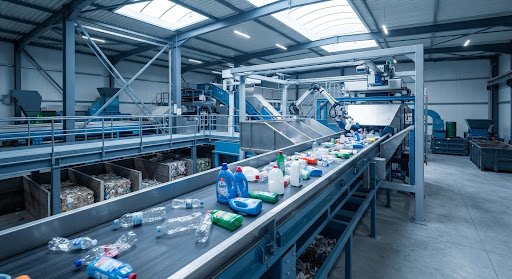
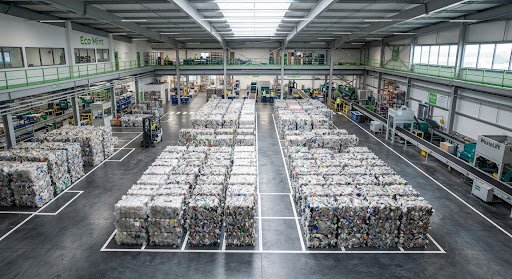
When your blue curbside cart is tipped into an automated side-loader truck, it undergoes high-compaction transport to a regional Material Recovery Facility (MRF). Inside, high-speed automated machinery makes split-second physical separations:
01
Star Screens & Trommels
Rotating steel discs lift flat cardboard and newsprint while 3D containers roll downward. Plastic bags inadvertently wrap tightly around these axles, causing mechanical stalls.
02
NIR Optical Sensors
Near-Infrared light illuminates passing objects at 3 meters per second. The reflected chemical light spectrum identifies the polymer within 12 milliseconds.
03
Air Knife Ejection
Microsecond bursts of compressed air shoot verified PET or HDPE over a separator barrier into collection hoppers, baling up to 1,500 pounds of clean flake per hour.
The 3 Golden Rules of Household Plastic Sorting
To minimize contamination fees and maximize recovery rates, adhere strictly to these three industrial rules of thumb:
Empty, Clean, and Dry
You do not need to run recyclables through the dishwasher. A quick scraper pass and a quick 2-second rinse is sufficient. What matters is eliminating residual liquids and fats—a half-full soda bottle can soak adjacent dry paper fibers, instantly turning an entire $300 paper bale into landfill waste.
Screw Caps Back On Firmly
Historical advice told residents to discard caps because they are polypropylene (#5) while bottles are PET (#1). Modern protocol is the opposite: keep caps tightly threaded. Loose caps fall through mechanical screen slots into crushed glass grit, while tethered caps are easily separated later during water float-sink tanks.
Never Bag Your Recyclables
Keep items 100% loose inside your curbside wheeled cart. For employee safety reasons, MRF sorting line operators are instructed never to cut open opaque garbage bags (which might contain needles, chemicals, or broken glass). Bagged recycling goes straight into the landfill compactor.
Shareable FAQ for Homeowners
Why isn't black plastic accepted even if it has a #1 or #5 code?
What do I do with lotion and soap pump dispensers?
Can I recycle old plastic garden hoses or outdoor toys?
Backyard Composting 101: The Golden 3:1 Brown-to-Green Ratio
Master thermal composting stages, moisture equilibrium, and odor elimination.