The Bulky Waste Dilemma: Why Oversized Items Cripple Standard Routes
Every municipal curbside fleet operates under stringent physical and mechanical constraints calibrated specifically for standard household waste. Modern solid waste collection relies predominantly on Automated Side-Loader (ASL) trucks equipped with hydraulic robotic arms, or heavy rear-loader compactor trucks engineered for loose, bagged solid waste. When an unnotified resident drops a heavy king-size mattress, a sectional sofa, or a cast-iron porcelain bathtub at the curb, regular collection personnel are physically forbidden from loading the material.
The reasons are rooted in fleet engineering and mechanical safety. Mattress inner springs act as destructive snares; once drawn into an ASL compaction cylinder, high-tensile steel wire wraps around hydraulic guide rams and packing blade teeth, instantly causing catastrophic fleet downtime that costs municipalities thousands of dollars in mechanical repairs. Similarly, heavy white goods (such as refrigerators, cast-iron dishwashers, and washing machines) can crack compaction sweep plates or rupture the hydraulic lines powering the compactor hopper.
precision_manufacturing
Fleet Mechanization Profile
Knuckleboom Grapple Claws vs. Standard Compactors
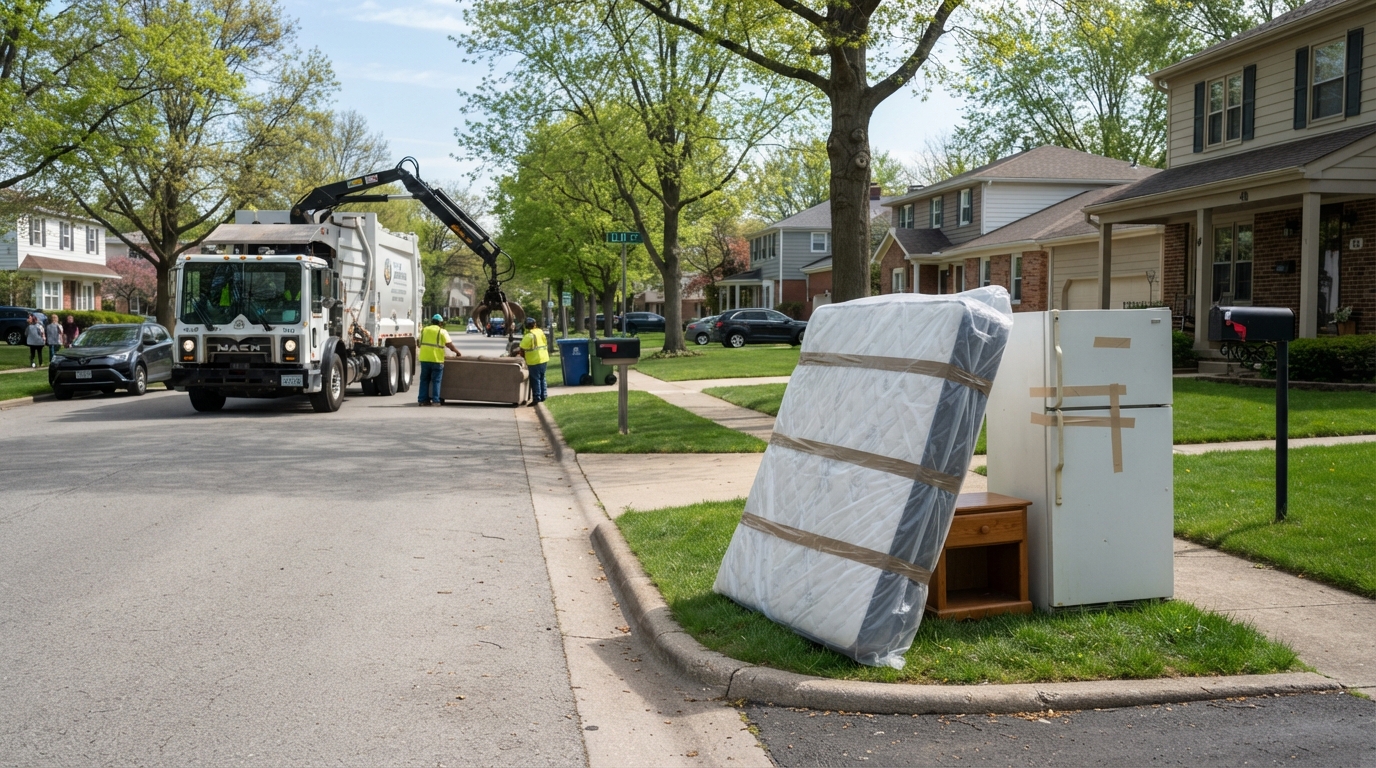
Specialized municipal bulky recovery relies on hydraulic knuckleboom boom arms capable of lifting up to 3,500 lbs with 24-foot articulation radii. These open-bed grapple haulers bypass standard compaction plants completely to bring furniture directly to heavy-sort diversion transfer stations.
Because standard collection crews must skip oversized materials, municipalities dispatch dedicated specialized bulky routes. These deployment operations involve specialized hydraulic knuckleboom claw trucks (often called “grapple trucks”), open-top roll-off flatbeds, and multi-technician heavy-lift crews equipped with pneumatic rigging gear. Mobilizing this secondary fleet incurs substantial municipal fuel, labor, and dispatch costs, which is why municipal solid waste divisions require pre-scheduled booking windows rather than impromptu drop-offs.
Curbside dumping without an active reservation constitutes a municipal civil violation in virtually all North American cities. Code compliance officers utilize logistics telematics, neighborhood sweep squads, and routing manifest databases to cross-reference unreserved roadside items against collection service addresses. Violations often trigger swift remediation notices, administrative processing surcharges, and municipal code citations ranging between $150 and $1,200 per occurrence. In chronic cases, municipalities can attach municipal tax liens to offending property deeds to recoup special disposal and towing fees.
Item-by-Item Disposal Rules & Critical Restrictions
Different categories of bulky waste present vastly different chemical, structural, and biological management requirements. Understanding your jurisdiction’s handling standards prevents your items from being tagged with an orange “Non-Compliant Item Refusal” sticker.
Mattresses present unique hazards during shredding operations. Beyond shredder-jamming spring coils, bio-sanitation laws in metropolitan centers (including New York City, Chicago, Philadelphia, and Los Angeles) require all curbside mattresses and box springs to be fully sealed inside heavy-duty, clear plastic mattress disposal encasement bags.
This rule specifically mitigates vector risks associated with Cimex lectularius (bedbugs) and pathogenic mold spore transfers to sanitation personnel. Encasement bags must be sealed airtight with water-resistant packing or duct tape before being placed on the public curb. Crews are legally empowered to bypass unbagged, ripped, or non-transparently wrapped mattresses on health and safety grounds.
Sectionals and large sofas require separation into individual modules prior to curb placement so that lifting thresholds (commonly capped at 150 lbs per separate lift piece) are not breached. Recliners equipped with mechanical metal assist-lift assemblies must have electronic motor cables unplugged and transformer packs removed for dedicated e-waste handling.
Furthermore, polyurethane foam cushions manufactured prior to 2015 frequently contain halogenated flame retardants (such as TDCPP and polybrominated diphenyl ethers). While permitted in municipal landfill bulky drop-offs, these cushions must not be burned, shredded, or left in standing water where chemical runoff can infiltrate storm sewers. Scheduling your set-out strictly during dry weather prevents soaked foam from multiplying in weight by up to 300%.
Residential cooling equipment—such as refrigerators, upright freezers, dehumidifiers, and window air-conditioner units—falls under strict federal jurisdiction under Section 608 of the United States Clean Air Act. These units contain chlorofluorocarbons (CFCs), hydrochlorofluorocarbons (HCFCs), or hydrofluorocarbons (HFCs), which are potent ozone-depleting substances and greenhouse gases.
Venting refrigerant into the atmosphere during crushing or disposal carries EPA civil penalties of up to $44,539 per day per violation. Municipalities strictly forbid residents from cutting refrigerant tubing or attempting amateur decommissioning. For curbside collection, cities either charge a specialized Freon evacuation fee (typically $25–$60) or demand an official certification sticker signed by an EPA-certified Section 608 universal technician proving complete closed-loop gas evacuation prior to roadside placement.
The 4 Golden Scheduling Rules for Municipal Bulky Pickups
To ensure seamless, incident-free collection that honors city codes and operator safety, adhere to the following four logistics rules before placing any item within the public right-of-way.
Allocation Vouchers vs. Paid Tags
Most municipal utility contracts offer 2 to 4 free scheduled bulky pickups per residential address each calendar year, restricted to a strict limit of 3 to 5 large items per pickup run. Additional items require prepaid bulk stickers ($10–$35 each) purchased via your municipal web portal.
Set-Out Timing Ordinances
Never position oversized waste curbside earlier than 24 hours prior to your scheduled collection day (typically after 6:00 PM the evening before). Setting items out days in advance generates roadway sightline obstructions, attracts illegal wild scavengers, and violates residential neighborhood blight ordinances.
5-Foot Radius & Aerial Arc
Heavy grapple truck cranes need at least 14 feet of vertical headroom and a 5-foot horizontal clearance perimeter. Keep bulky piles completely clear of parked vehicles, mailboxes, decorative fire hydrants, stormwater grates, and low-hanging telecommunication or electrical lines.
Strict Exclusions Apply
Residential bulky pickup is expressly intended for household goods, not construction demolition. Drywall, asphalt shingles, concrete cinder blocks, vehicle batteries, pressure-treated lumber, and commercial contractor debris are rejected instantly without exception.
Sustainable Alternatives: Diversion Before Destruction
Landfills throughout the United States and Canada are rapidly reaching critical capacity limits. Discarded furniture and bulky white goods comprise approximately 9.8 million tons of municipal solid waste annually, with an abysmal national recycling rate hovering below 12%. Before consigning durable materials to permanent burial, review these proactive circular diversion channels.
Nonprofit Doorstep Donation Pick-Up Services
Organizations such as Habitat for Humanity ReStore, The Salvation Army, and local domestic transitional housing charities maintain dedicated box truck fleets that pick up clean, undamaged couches, solid-wood dressers, and functional kitchen tables directly from your doorstep without cost. Donating diverts high-tonnage items while providing formal federal tax contribution write-offs.
State Extended Producer Responsibility (EPR) Haul-Away
Through state-mandated Product Stewardship programs (such as the Mattress Recycling Council’s Bye Bye Mattress initiative in California, Connecticut, Rhode Island, and Oregon), retailers who deliver a new mattress or box spring are legally compelled by state statute to haul away your old unit at no additional surcharge. Always demand this haul-back when placing delivery orders.
Direct Scrap Metal Reclamation
Washing machines, dryers, steel bedframes, metal filing cabinets, and cast-iron radiators possess substantial scrap value. Independent, licensed scrap metal collectors actively seek these items. Posting an alert on neighborhood platforms or coordinating directly with local scrap yards ensures near-100% material recycling of the high-grade steel, copper wiring, and cast aluminum.
Practical Field Answers
Frequently Asked Bulky Waste Questions
What happens if it rains on my sofa the night before bulky collection?
How can I safely dispose of a refrigerator if my city does not offer Freon evacuation?
Can I place rolled carpeting out for bulky collection?
What should I do if a private scavenger takes parts of my bulky pile before the city arrives?
verified
Key Takeaways for Bulky Waste
Key Takeaways for Bulky Waste
1
2
3
4
5
Plastic Bags & Bubble Wrap: How the Store Drop-Off System Works
Why plastic film wraps destroy sorting machinery at MRF plants and how grocery store film collection bins properly convert them into composite decking.