
The Monster in the Sewer: What Exactly is a Fatberg?
Beneath our modern city streets, a silent and insidious infrastructural crisis is metastasizing. A fatberg is an immense, rigid subterranean agglomeration composed of congealed fats, cooking oils, heavy grease, single-use wet wipes (frequently and erroneously branded as “flushable”), feminine hygiene products, and fine mineral silt. While these components begin their journey as separated residential kitchen cast-offs and bathroom waste, the hydrodynamic turbulence and ambient cold of subterranean sewer mains compress them into monstrous conglomerates that can span hundreds of feet in length and weigh dozens of metric tons.
For municipal utilities, fatbergs represent a catastrophic operational hemorrhage. Every fiscal year, wastewater authorities allocate billions of dollars to mechanical abatement programs. Removing a single hardened main-line obstruction necessitates deploying industrial continuous-pressure hydro-jetters operating above 4,000 PSI, high-velocity vacuum extraction trucks, and, in severe cases, open-trench excavations where backhoes physically shatter the calcified blockages. This grueling manual labor exposes municipal operators to hazardous biological atmospheres and volatile sewer gas concentrations.
“Pouring warm liquid oil down the drain is an optical illusion. The moment it hits cold underground municipal conduits, it hardens into concrete-like rock.”
While citywide emergencies capture the headlines, the residential damage strikes far closer to home. When private building laterals—the 4-inch sewer pipes connecting a domicile to the street main—become constricted with grease, gravity halts wastewater flow. The outcome is catastrophic: raw, pressurized sewage geysering up through basement floor drains, first-floor bathtubs, and utility sinks. Because private laterals are classified as personal property, traditional homeowners insurance policies routinely deny coverage for FOG-induced structural backups, saddling families with excavation and bio-hazard remediation invoices ranging from $5,000 to over $15,000.
The Kitchen Chemistry Myth: Why Hot Water and Dish Soap Fail
The single most pervasive and destructive household myth is the belief that running a faucet on scalding hot water combined with a copious squeeze of degreasing dish detergent liquefies and eliminates cooking lipids. Homeowners assume this practice flushes the fat harmlessly into deep municipal oblivion. In reality, this technique simply accelerates downstream sewer thrombosis.
Dish detergents are synthetic surfactants. Their molecular structure contains a hydrophilic (water-attracting) head and a lipophilic (oil-attracting) tail. When mixed with hot water, the surfactant molecules encapsulate microscopic oil globules into a temporary suspension known as an emulsion. However, this emulsion is fundamentally unstable.
As the emulsified slurry journeys 20 to 60 feet down the drainage stack, two irreversible thermodynamic and chemical realities take over:
- Thermal Dissipation: Subterranean cast-iron and PVC drainage pipes sit at underground ground temperatures (typically 50°F–55°F / 10°C–13°C). The scalding rinse water cools within seconds, causing lipids to drop below their solidifying melting points.
- Surfactant Dilution & Calcium Bonding: Dilution strips the surfactant barrier from lipid droplets. Simultaneously, free fatty acids in the grease interact with dissolved calcium (Ca²⁺) and magnesium (Mg²⁺) ions present in municipal tap water, concrete sewer crown degradation, and graywater soaps.
This interaction drives calcium saponification. Rather than forming soluble, bubbly soap, the reaction generates insoluble metallic soap solids—a dense, greasy limestone equivalent with rock-like tensile shear strength. This paste adheres like epoxy to internal pipe perimeters, accreting layer upon layer until standard drainage flow drops to absolute zero.
The 4 FOG Categories: Fats, Oils, Grease, and Suspended Solids
Comprehensive grease management begins with understanding the physical states and origins of culinary lipids. Wastewater engineers classify waste stream liabilities under four specific behavioral categories:
Dense, highly saturated triglyceride chains that solidify firmly at room temperature (bacon lard, rendering tallow, duck fat, butter, and chicken skin drippings). These rapidly create rigid core plugs in domestic drain elbows.
Mono- and poly-unsaturated vegetable lipids that stay liquid in bottles (olive, canola, peanut, corn, and sesame oils). Many residents assume these are safe to wash away, but they chemically undergo identical calcium saponification underground.
Viscous, gelatinous mixtures formed from hot rendered pan proteins, fond reductions, barbecue glazes, and melted griddle residues. These act as high-tack biological glues inside plumbing elbows.
Stealth culprits washed into sinks without a second thought: mayonnaise, ranch and vinaigrette dressings, heavy dairy cream, cake frostings, sour cream, and flour-and-shortening batter residues.
The “Can It, Cool It, Trash It” Home SOP
Eliminating FOG contamination in domestic plumbing requires practical standard operating procedures (SOPs) integrated into the daily post-meal kitchen workflow. Waste minimization at the sink sink boundary removes 99% of downstream pipe risk.
The Scraping Habit
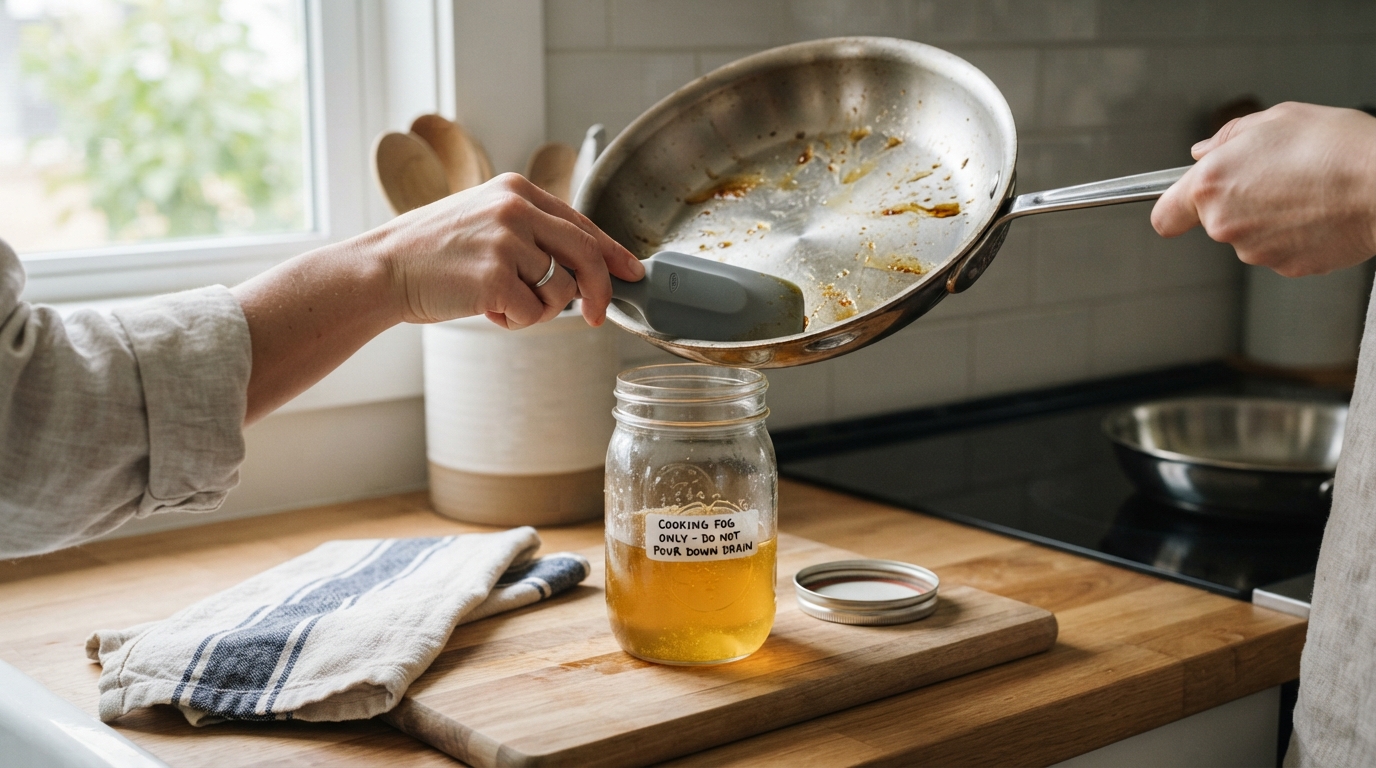
Before applying any water or soap to a skillet or plate, mechanically strip away all oily films. Use dry paper towels, compostable napkins, or a reusable food-grade silicone squeegee to scrape lipid residues directly into your organic green waste bin or municipal trash bag.
The Repurposed Tin Can Collector
Store an empty aluminum soup can, tomato paste tin, or coffee container in the freezer or back corner of the counter. Decant warm, molten pan grease (like bacon or sausage drippings) straight into the vessel. Once chilled, the grease solidifies into a block that easily dumps into your household landfill bin.
Large Volume Deep Fryer Disposal
When dealing with 2 to 5 gallons of used frying oil from seasonal holiday deep-frying, allow the oil to cool completely to room temperature. Pour it back through a funnel into its original plastic jug with a screw-top lid. Deliver the sealed container to your county municipal drop-off depot or a neighborhood bio-diesel collection portal.
Household Composting Rules
Never introduce pure rendered fats or large volumes of oil to backyard aerobic compost bins. Lipids smother aerobic microbial decomposers, causing oxygen depletion, offensive anaerobic rancidity, and turning your compost pile into an irresistible beacon for rodents and raccoons.
Interactive FAQ: Real-World FOG Dilemmas
Click any question below to inspect certified chemical answers and utility-grade recommendations.
Can I pour grease down the garbage disposal if I run it with ice cubes and lemon peels?
Are liquid vegetable and olive oils safe for drains since they never solidify in the bottle?
Where can I drop off large quantities of used turkey fryer oil?
What is the safest way to clear a slow kitchen drain without harsh caustic chemicals?
task_alt
Key Takeaways: Home FOG Defense
Key Takeaways: Home FOG Defense
1
2
3
4
5
Mattresses, Couches & Appliances: Scheduling Municipal Bulky Pickups
How to book free annual municipal bulk collection days, donate usable furniture without fees, and ensure Freon-certified refrigerator removal.